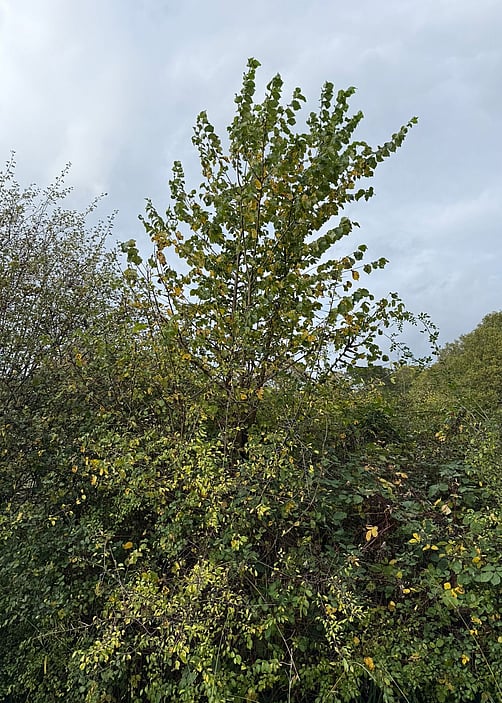
Elm in Centenary Field
Elms over Epsom
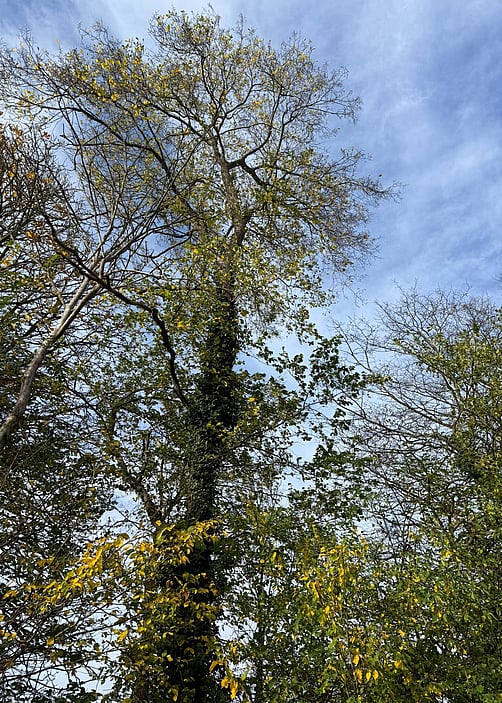
On Tuesday 21st October we were visited by Howard Gregory who is striving to return elms to the treescape of Epsom and Ashtead using DED (Dutch Elm Disease) resistant and tolerant cultivars and species. His report is detailed below but here are three examples he has dicovered on Rye Meadows.
He wishes to plant more elms on Rye Meadows and we are considering planting saplings in the newer hedge lines planted by volunteers some 5 to 8 years ago. These new hedges have some gaps and interspersing with elms would re-establish the practice of ancient hedge planting.
The Ashtead Rye Meadows Elms
Elms follow man. Elms were used for boundary lines or to mark prominent places. The path from Bushy Shaw seems to follow an ancient thoroughfare into Rye Meadows.
Trees were often planted as a resource and investment for the manufacture and repairs to agriculture and farm equipment. This might explain the Poplar, Hornbeam and elm trees in the vicinity. Rye Meadows has English elm along some of the boundaries indicating ancient land ownership markers.
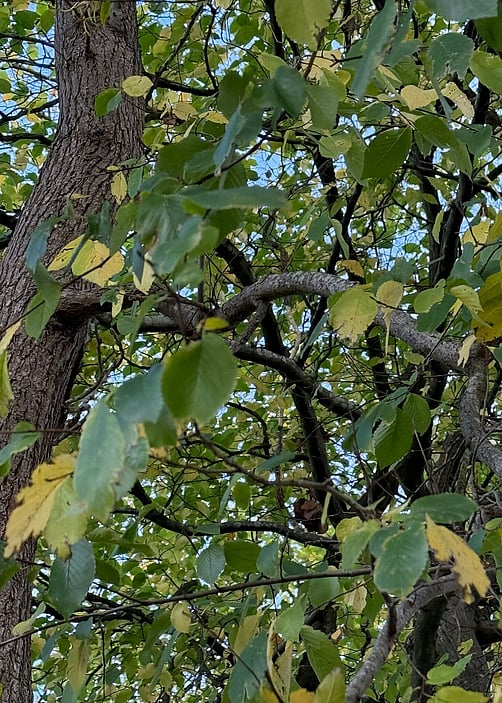
There is a very unusual and rare elm along FP596, opposite the leaning Poplar tree which is quite remarkable. This tree is an European White Elm, also called the Fluttering elm due to its flowers being on pendant long stalks. The botanical name is Ulmus laevis meaning ‘smooth’ or ‘free from hair’.
Ulmus laevis is very special because it naturally grows in flood plains and very wet conditions. It produces buttresses on the trunks which is an adaptation for growing in water. You can see these at the base of the tree.
Ulmus laevis is also unique in that it produces its own chemicals called Alnulin that discourages the vector beetles carrying the Dutch Elm disease. This ability is lessened if the tree is grown in dry conditions.
I have only seen this rare elm in Guildford (Rydes Hill School entrance in Broad Street) and the Ham Lands by the river Thames near Richmond). Both these trees set seed which have been collected and distributed to elm tree growers around the UK. I have planted three of the Ham Lands babies in Long Grove Recreation park in Epsom.
The most well known Ulmus laevis is in the Ladywell Fields in Lewisham, now known as the Ladywell Elm.
The Ryebrook European White Elm tree is a little bit different to the other two locations.
Whilst the other White Elm trees set seed, there is only limited regeneration around their proximity due to paths, tarmac, the river, grass, other trees etc. At the Ryebrook, the ground next to the path 596 is covered in saplings and next to Fraudings.
The environment at Rye Meadows is perfect for Ulmus laevis being typical flood plain.
At the time when the seeds fell to the ground, the soil must have been exposed or bare and sticky due to a flood or shrub clearance. Late winter surface water will create the ideal conditions for the seed to establish. This further confirms the very special habitat of the Rye Meadows.
The location of this Fluttering elm has been shared with other elm experts around the country with a lot of interest in the natural regeneration at Ryebrook. Whoever planted this tree understood its suitability to wetlands. Right tree – right place.
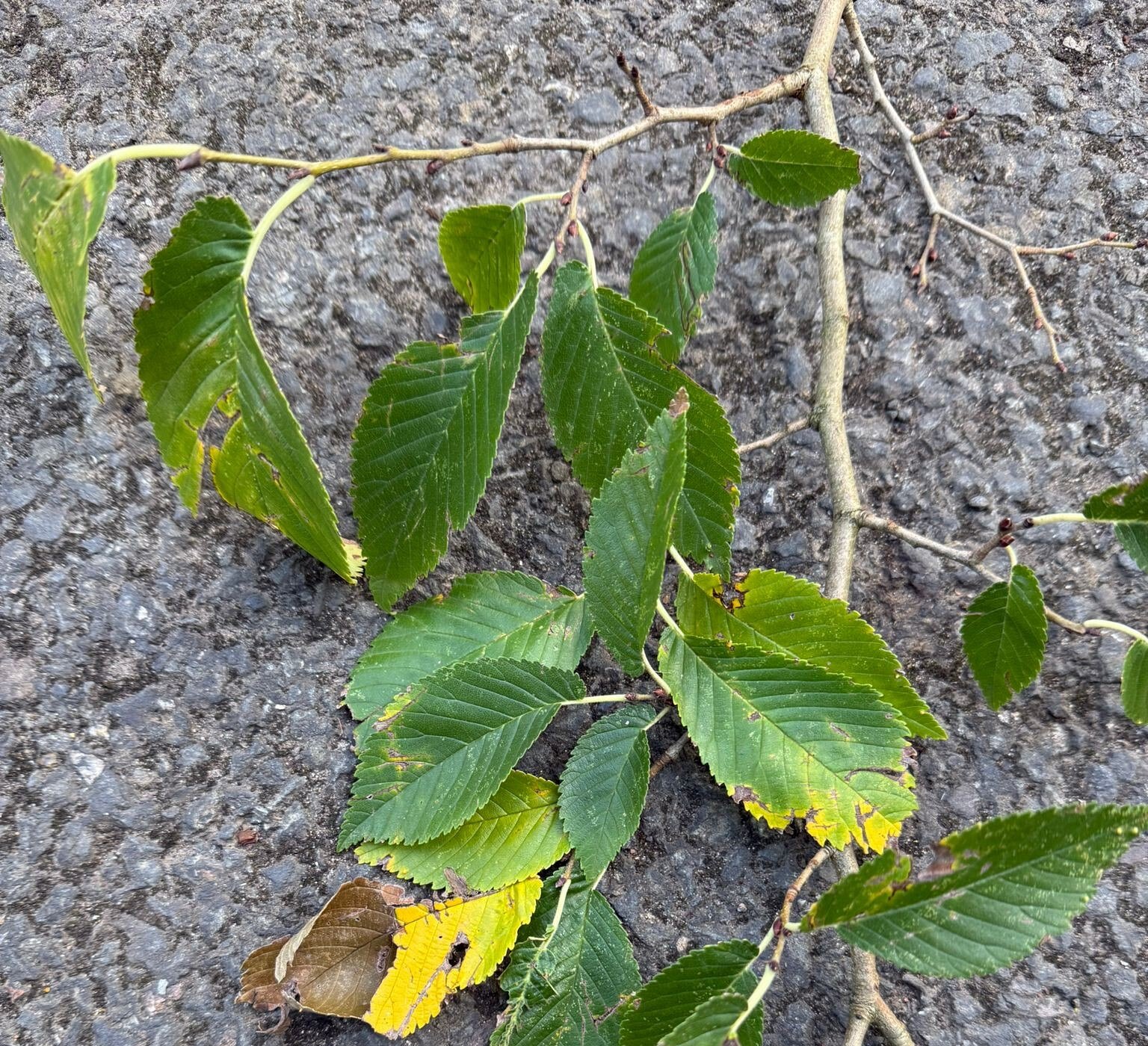
The key identification features are the unbranched leaf veins in the upper two thirds of the leaf, the buttressing of the trunk and of course its stalked flowers.
Ashtead Wood Road
Along Ashtead Woods Road parallel with the pond there are some English elm and two forms of Field elm in the north side hedgerow. The leaves are not reliable for identification as they are a hedge and the leaves are mostly immature leaves.
The Field elm is an indicator tree of our Anglo Saxon heritage, especially in East Anglia. In Surrey and Kent, the Jutes brought Field elm but no original sites exist to my knowledge. However, the elms were constantly being propagated by seed and the saplings used in farming for boundaries, forestry, carts, wheels, carpentry etc.
Field elms are highly variable in their leaf shapes. A bit like Oaks in that all trees are slightly different. Mature leaves and young leaves will be different on the same tree.
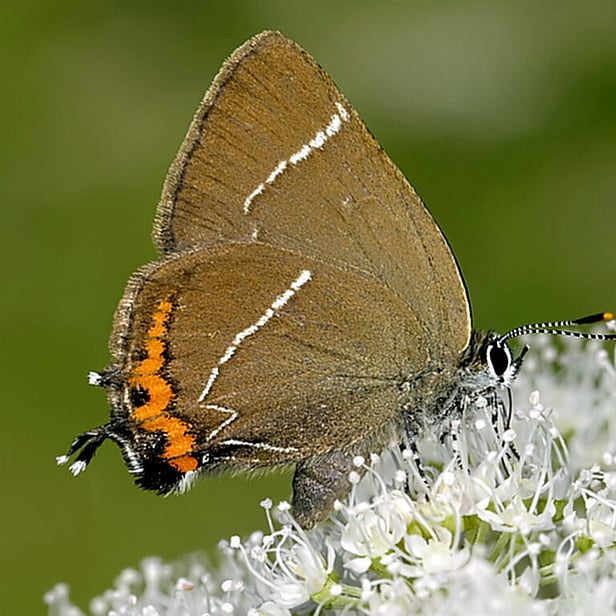
Elms are very important as host trees to the White Letter Hairstreak butterflies which lay their eggs at the end of previous or two year old wood, near the flower buds. In April when the flowers open, the baby caterpillars will hatch, walk along the stems and bury themselves into the scales at the bottom of a flower. They then munch away and start the caterpillar stages and emerge in July. They do their courtships at the top of the trees. They need summer nectar producing trees and plants for their food such as Lime trees (Tilia).
Look after your elms, they are part of our heritage and the rich mosaic of the British countryside.
Howard Gregory Dip. Hort. (Kew)
Elms Over Epsom (Facebook)
Elm Research Worldwide (Whatsapp)
The white-letter hairstreak
The white-letter hairstreak is a small butterfly that breeds in elm trees in hedgerows, woodland rides and scrub. It can be hard to spot as it flutters around the treetops, but does come down to lower levels to nectar on flowers like bramble. Adults are on the wing from June to August, and there is only one brood per year. Caterpillars are well camouflaged, looking like young buds and leaves.
How to identify
The white-letter hairstreak is a small, brown butterfly that has white, W-shaped lines on the underside of the wings. The black hairstreak is similar, but sports a row of black spots on the hindwings.
(Text above from https://www.wildlifetrusts.org/wildlife-explorer/invertebrates/butterflies/white-letter-hairstreak)